<?xml version="1.0" encoding="UTF-8"?><profile href="/about_us/FacultyDirectory/MicrobiologyBiochemistryImmunology/YusufOmosun/index.php">
   <image>
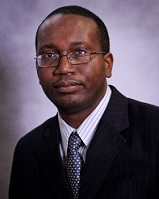
      <img src="/_resources/MSMimages/FacultyDirectoryImages/MBI/YOmusun.jpg" alt="Yusuf Omosun Ph.D."></img>
   </image>
   <name>Yusuf Omosun, Ph.D.</name>
   <title>Assistant Professor</title>
   <department>Microbiology, Biochemistry &amp; Immunology</department>
   <email>yomosun@msm.edu</email>
   <title2></title2>
   <department2></department2>
   <phone></phone>
   <location>Hugh Gloster Building</location>
   <education>
      <p>
         <strong>
            <strong>POSTDOCTORAL TRAINING:
               <br></br>
            </strong>
         </strong>Malaria Branch, Center for Global Health,
         <br></br>Centers for Disease Control and Prevention, Atlanta
      </p>
      <p>
         <strong>
            <br></br>GRADUATE:
         </strong>
         <br></br>University of Ibadan
         <br></br>
         <strong>Degree: </strong>Doctor of Philosophy in Cellular Parasitology
         <br></br>
         <br></br>University of Ibadan
         <br></br>
         <strong>Degree: </strong>Master of Science in Cellular Parasitology 
         <br></br>
         <br></br>
         <strong>UNDERGRADUATE: </strong>
         <br></br>University of Benin
         <br></br>
         <strong>Degree: </strong>Bachelor of Science in Biochemistry
      </p>
   </education>
   <research>
      <p>The overall objective of my research work is to understand what is happening in host
         cells during chlamydia infection of the female genital tract that leads to the process
         of chlamydial pathogenesis which ends in tubal pathologies and infertility. My work
         involves the use genomics, proteomics, metabolomics and systems biology in answering
         research questions that arise from my studies. My research focus involves elucidating
         the molecular mechanisms underpinning the pathogenesis of chlamydial infection. Results
         generated from my lab have identified some novel and differentially expressed miRNAs
         that can be viable biomarkers for pathologies associated with Chlamydia infection.
         In addition, we are studying genes involved in antibacterial response, apoptosis,
         inflammation and epithelial to mesenchymal transition that are altered during chlamydia
         infection leading to tubal factor infertility, which will potentially fill this gap
         in knowledge. Results from my lab has also opened up new areas of research which includes
         elucidating the effects of circadian rhythms on chlamydia infection and pathogenesis.
         My research is innovative and utilizes recently described key regulatory molecules,
         state-of-the-art molecular techniques and novel technologies in a focused set of studies
         to achieve the groundbreaking feat of discovering possible therapeutics/biomarkers
         for pathologies caused by Chlamydia infection. I have submitted datasets to the 
         <a href="https://www.ncbi.nlm.nih.gov/geo/subs/?view=series&amp;display=100">NCBI Geo webpage</a>, which is the most comprehensive RNA-Seq dataset from mice experiments. I am currently
         mentoring graduate students in my lab. I have had medical students and minority undergraduates
         from Spelman College (RISE fellow) and Georgia Gwinnett College in my lab.
      </p>
   </research>
   <boardcerts></boardcerts>
   <publications>
      <ul>
         <li>Benyeogor I, Simoneaux T, Wu Y, Lundy S, George Z, Ryans K, McKeithen D, Pais R, Ellerson
            D, Lorenz WW, Omosun T, Thompson W, Eko FO, Black CM, Blas-Machado U, Igietseme JU,
            He Q, and 
            <strong>Omosun Y</strong> (2019). A unique insight into the MiRNA profile during genital chlamydial infection.
            BMC Genomics. 2019 Feb 18;20(1):143. doi: 10.1186/s12864-019-5495-6.
         </li>
         <li>George Z, 
            <strong>Omosun Y</strong>, Azenabor AA, Goldstein J, Partin J, Joseph K, Ellerson D, He Q, Eko F, MacDonald
            MA, Reed M, Svoboda P, Stuchlik O, Pohl J, Lutter E, Bandea C, Black CM, Igietseme
            JU. (2019). The molecular mechanism of induction of unfolded protein response by Chlamydia.
            Biochem Biophys Res Commun. 2019; 508(2): 421-429. PMID: 30503337.
         </li>
         <li>Igietseme JU, 
            <strong>Omosun Y</strong>, Nagy T, Stuchlik O, Reed MS, He Q, Partin J, Joseph K, Ellerson D, George Z, Goldstein
            J, Eko FO, Bandea C, Pohl J, Black CM (2018).  Molecular Pathogenesis of Chlamydia
            Disease Complications: Epithelial-Mesenchymal Transition and Fibrosis. Infection and
            Immunity; 86(1). pii: e00585-17. PMID: 29084894.
         </li>
         <li>
            <strong>Omosun YO</strong>, Blackstock AJ, Williamson J, van Eijk AM, Ayisi J, Otieno J, Lal RB, ter Kuile FO,
            Slutsker L and Shi YP(2018) Association of maternal KIR gene content polymorphisms
            with reduction in perinatal transmission of HIV-1. 
            <strong>
               <em>Plos One </em>
            </strong>13 (1): e0191733
         </li>
         <li>Ryans K, 
            <strong>Omosun Y*</strong>, McKeithen DN, Simoneaux T, Mills CC, Bowen N, Eko FO, Black CM, Igietseme JU, He
            Q. (2017) The immunoregulatory role of alpha enolase in dendritic cell function during
            Chlamydia infection. BMC Immunol. May 19;18(1):27. PMID: 28525970.
         </li>
      </ul>
      <a href="http://www.ncbi.nlm.nih.gov/sites/myncbi/1JsKtyiI-AYkt/bibliography/44025924/public/?sort=date&amp;direction=ascending">View additional publications</a>
   </publications>
   <awards>
      <ul>
         <li>2018: A short course in Systems Biology, A Foundation for Interdisciplinary Careers,
            Travel Subsidy
         </li>
         <li>2017: Keystone Symposia Scholarship Award</li>
         <li>2015: ABRCMS Judges’ Travel Subsidy</li>
         <li>2014: ASM Minority Travel Grant Award</li>
         <li>2013: ABRCMS Judges’ Travel Subsidy </li>
         <li>2013: FASEB MARC Program Travel Award </li>
         <li>2009-2007: ASM/CCID Post-Doctoral Fellowship</li>
      </ul>
   </awards>
</profile>