<?xml version="1.0" encoding="UTF-8"?><profile href="/about_us/FacultyDirectory/Neurobiology/RobertSloviter/index.php">
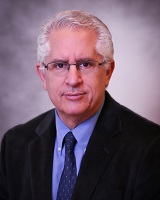
   <image>
      <img src="/_resources/MSMimages/FacultyDirectoryImages/Neurobiology/Sloviter.jpg" alt="Robert S. Sloviter, Ph.D."></img>
   </image>
   <name>Robert S. Sloviter, Ph.D.</name>
   <title>Professor </title>
   <department>Neurobiology</department>
   <title2></title2>
   <department2>Pharmacology and Toxicology </department2>
   <email>rsloviter@msm.edu</email>
   <phone>(404) 756-6697 </phone>
   <location>Multidisciplinary Research Center F245</location>
   <education>
      <p>
         <strong>
            <strong>POSTGRADUATE:
               <br></br>
            </strong>
         </strong>Pennsylvania State University 
         <strong>
            <strong>
               <br></br>
            </strong>Fellowship:
         </strong> Neuropharmacology
         <br></br>
         <strong>
            <strong>
               <br></br>GRADUATE:
            </strong>
            <br></br>
         </strong>Pennsylvania State University College of Medicine
         <br></br>
         <strong>Degree: </strong>
         <span>Doctor of Philosophy in Pharmacology
            <br></br>
            <br></br>
            <strong>UNDERGRADUATE:</strong>
            <br></br>Drexel University, Philadelphia, PA
            <br></br>
            <strong>Degree:</strong> BS Biology
            <br></br>
         </span>
      </p>
   </education>
   <research>
      <p>
         <strong>Hippocampal Structure, Function, and Malfunction in Temporal Lobe Epilepsy</strong>
         <br></br>
         <br></br>The mammalian hippocampal formation subserves normal learning and memory, but when
         an injury to the temporal lobe occurs, the hippocampus can become a source of devastating
         epileptic seizures that often cannot currently be controlled. Our lab is interested
         in understanding how and why an injured hippocampus becomes spontaneously and abnormally
         hyperactive, and we develop animal models that replicate the human neurological disorder
         and can be used to develop new therapies.
         <br></br>
         <br></br>Currently, we use chronically implanted electrodes and continuous recording methods
         that enable us to produce a controlled injury and then assess hippocampal hyperexcitability
         and epilepsy onset. In addition to in vivo electrophysiology, we use anatomical and
         immunocytochemical methods to characterize the pathology and determine how it is related
         to the epileptic state.
      </p>
   </research>
   <boardcerts></boardcerts>
   <publications>
      <ul>
         <li>Norwood BA, Bumanglag AV, Osculati F, Sbarbati A, Marzola P, Nicolato E, Fabene PF,
            
            <strong>Sloviter RS</strong>. Classic hippocampal sclerosis and hippocampal-onset epilepsy produced by a single
            “cryptic” episode of focal hippocampal excitation in awake rats. J Comp Neurol 518:3381–3407,
            2010.
         </li>
         <li>
            <strong>Sloviter RS</strong>, Lømo T. Updating the lamellar hypothesis of hippocampal organization. Front Neural
            Circuits. 2012 Dec 10;6:102. doi: 10.3389/fncir.2012.00102.
         </li>
         <li>
            <strong>Sloviter, RS</strong>. Epileptogenesis meets Occam's Razor. Current Opinion in Pharmacology, Curr Opin
            Pharmacol. 2017 Aug;35:105-110. doi: 10.1016/j.coph.2017.07.012. Epub 2017 Aug 3
         </li>
         <li>Bumanglag AV, 
            <strong>Sloviter RS</strong>. No latency to dentate granule cell epileptogenesis in experimental temporal lobe
            epilepsy with hippocampal sclerosis. Epilepsia. 2018 Nov;59(11):2019-2034. doi: 10.1111/epi.14580.
            Epub 2018 Oct 19.
         </li>
         <li>Chun E, Bumanglag AV, Burke SN, 
            <strong>Sloviter RS</strong>. Targeted hippocampal GABA neuron ablation by Stable Substance P-saporin causes hippocampal
            sclerosis and chronic epilepsy in rats. Epilepsia. 2019 May;60(5):e52-e57. doi: 10.1111/epi.14723.
            Epub 2019 Apr 8.
         </li>
      </ul>
   </publications>
   <awards>
      <ul>
         <li>Javits Neuroscience Investigator Award; awarded by NINDS</li>
         <li>American Epilepsy Society Research Recognition Award</li>
         <li>Decade of the Brain Lecturer, American Academy of Neurology</li>
         <li>Fellow, American Association for the Advancement of Science</li>
         <li>International Epilepsy Research Award, Amer. Soc. Pharm. and Experimental Therapeutics</li>
         <li>First Swebelius Lecturer, Yale University, Department of Neurosurgery </li>
         <li>2008 Alberta Heritage Foundation Medical Research (AHFMR) Visiting Lecturer Award</li>
      </ul>
   </awards>
</profile>