
From Opportunity to Impact: How Scholarships Empower the Next Generation of Public Health Leaders
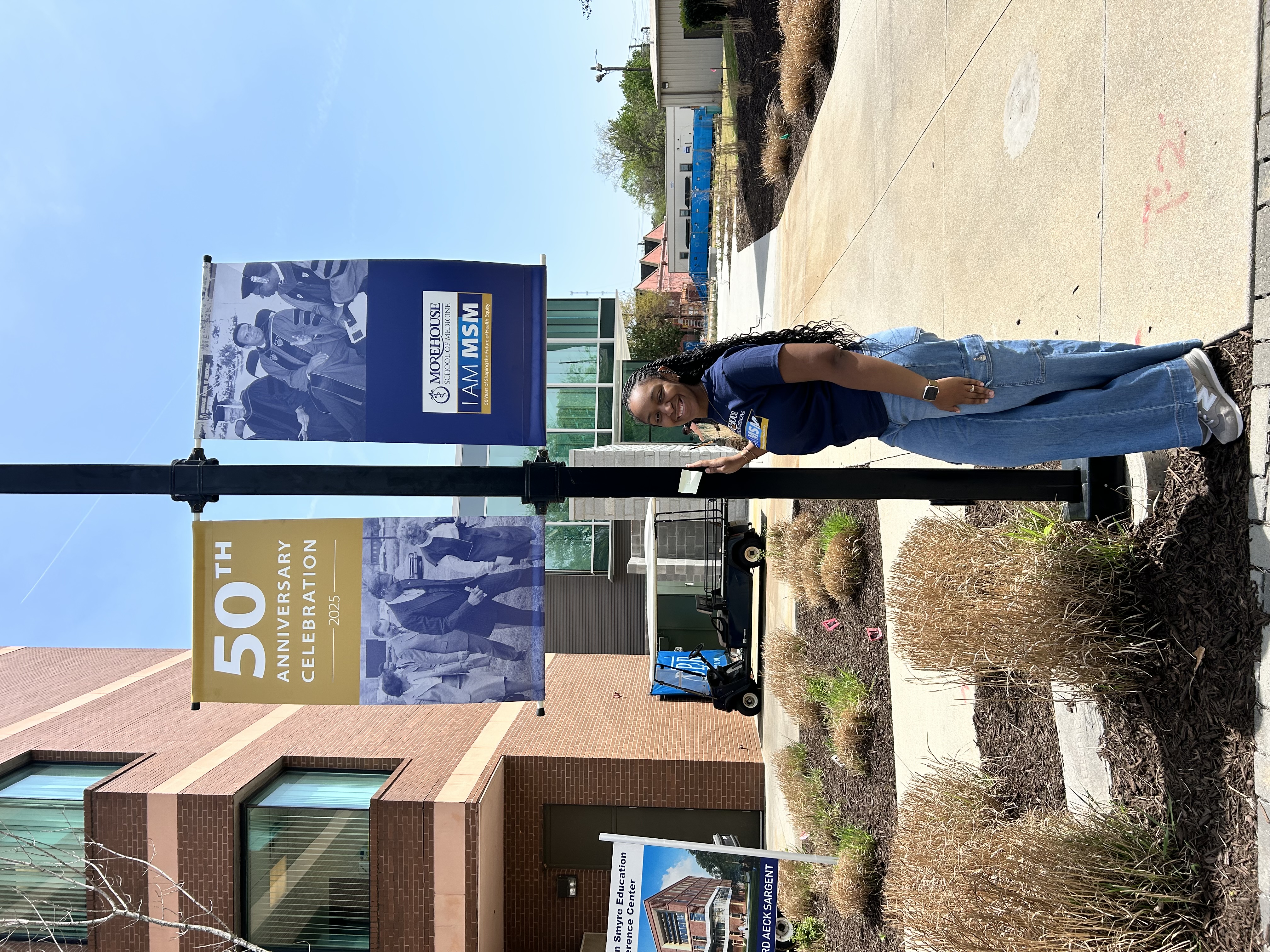 As Morehouse School of Medicine (MSM) hosted its annual Women with Heart (WWH) Luncheon
during American Heart Month, the occasion served as more than a single event. It offered
an opportunity to reflect on the students whose academic journeys are shaped by scholarship
support, community engagement and a shared commitment to improving health outcomes.
For Jenae Farrington, a second-year Master of Public Health (MPH) student, that moment carried personal and professional meaning.
Farrington entered public health with a strong scientific foundation, earning her undergraduate degree in biology. Early in her studies, she recognized that health outcomes are influenced not only by genetics but also by environmental, behavioral and community-level factors.
“I was always intrigued to understand the social factors and environmental factors that also influenced health,” she said. A public health internship before graduation strengthened that interest and introduced her to research and practice focused on measurable outcome improvement across population groups.
Choosing MSM for her MPH program was a deliberate decision. As a graduate of a historically Black college and university, Farrington was drawn to MSM’s legacy in medical education and its focus on community-based engagement.
“I really loved just the legacy and learning all of the history that brought us to where we are now and paved the way for students like myself,” she said. She also connected with the institution’s emphasis on applied learning. “We must do the work,” Farrington said, referencing how MSM’s mission is reflected in the MPH curriculum.
That focus on practical implementation is woven throughout her experience. Farrington highlighted hands-on learning opportunities that extended beyond the classroom into Atlanta neighborhoods. One of her most impactful experiences involved a neighborhood planning unit (NPU) project, where students conducted environmental assessments in communities near the Atlanta University Center (AUC).
“That opportunity allowed us to see the environment that the community was given to work with,” she said. “It also gave us good insight into the types of resources that they have accessible in their neighborhoods.”
Another memorable experience was a public health scavenger hunt designed to engage students and local residents. Teams identified green spaces, community gardens, clinics and other local assets, reinforcing the connection between environment and health.
“It was fun, but it was also informative,” Farrington said. “It gave us a chance to interact with the other programs at MSM and highlight resources across the AUC campuses that students as well as the local community could access.”
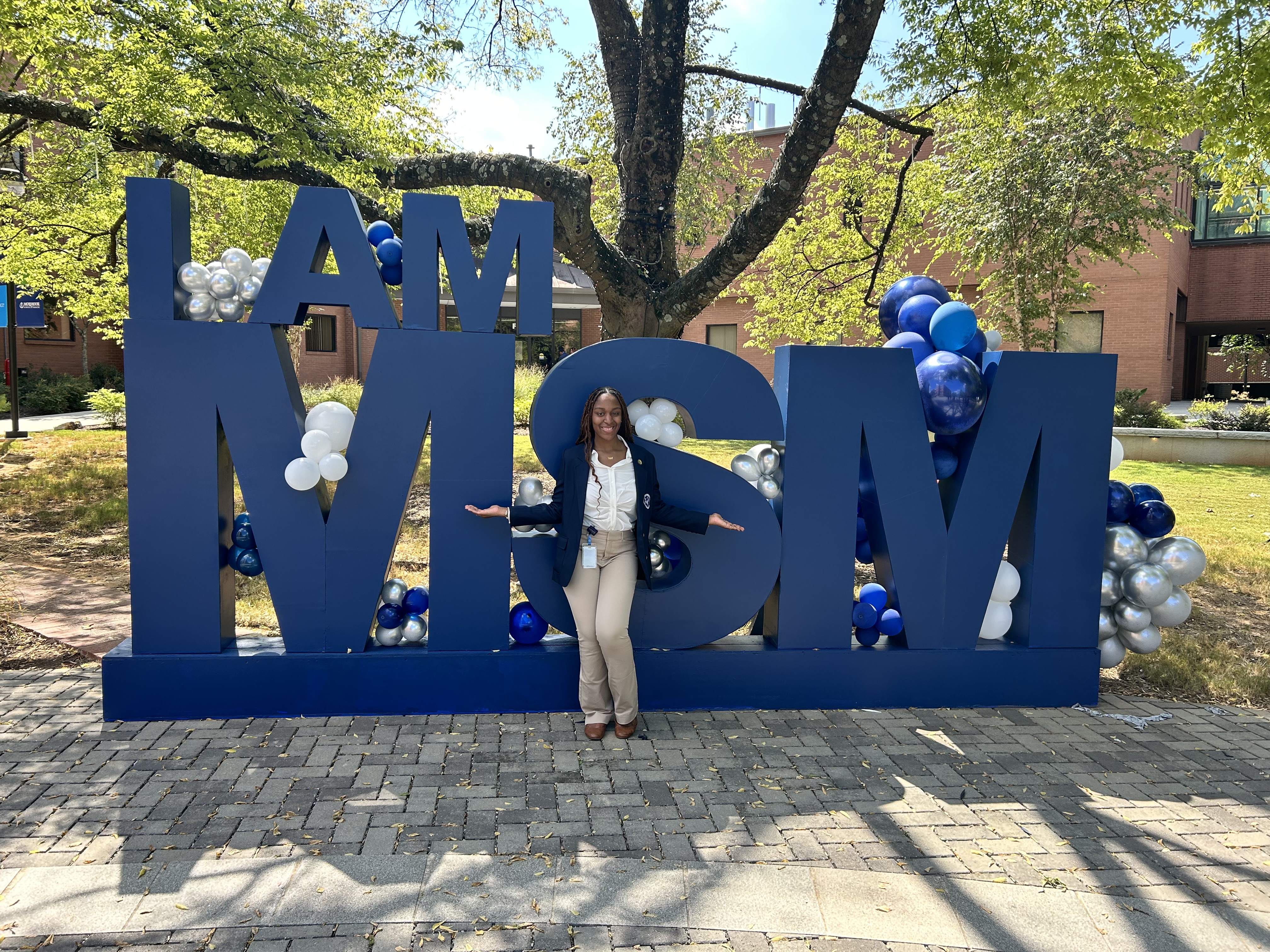 While experiential learning shaped her academic growth, scholarships were instrumental
in making her education possible. Farrington is a recipient of the Georgia Power Scholarship,
awarded before her first year at MSM. The scholarship covers approximately 75 percent
of her tuition, significantly reducing the financial burden of graduate study.
“It was a huge weight off my shoulders coming into the program,” she said. “I only had maybe $1,500 left to pay.”
Beyond financial assistance, Farrington emphasized the structured support and professional development opportunities associated with the Georgia Power Scholars community.
“They do a good job at connecting us with resources for jobs and internships,” she said. “They also do a really good job at ensuring we’re mentally OK as students.” That support allowed her to focus on academic performance and long-term career preparation.
Women with Heart aligned closely with her academic interests in cardiovascular health and maternal health outcomes. For Farrington, the event represented a call to sustained action focused on prevention and measurable improvement in health indicators among women experiencing higher rates of adverse outcomes.
She referenced documented variations in maternal mortality, heart disease and stroke across population groups, noting that these differences persist across income levels and geographic regions.
As a volunteer at Women with Heart, Farrington described the experience as both motivating and affirming. Being surrounded by women leaders in healthcare reinforced her long-term goals.
“It’s literally like a beacon of hope,” she said. “Even on the days where it’s hard or where you want to give up, you have people that have done it.”
Looking ahead, Farrington intends to pursue community-based public health practice grounded in trust, measurable impact and sustainable program design. She hopes to engage directly with communities experiencing healthcare access limitations and to translate data into practical, actionable strategies.
“I want to be on the ground in the community and not treat them like they’re just data points on a graph,” she said.
Stories like Farrington’s illustrate the impact of scholarship investment on workforce development and community health improvement. By supporting students prepared to address documented healthcare access gaps, MSM strengthens its capacity to improve outcomes across varied population groups.
During Heart Health Month and through Women with Heart, Morehouse School of Medicine highlighted not only prevention and advocacy, but also the students whose preparation positions them to advance measurable improvements in public health.
As Farrington said, “As long as you keep moving forward, something will happen for you. It just has to.”
About the Author
Michael Martin is a content strategist who believes in crafting compelling stories that inspire and connect. With a pen for storytelling, he brings the journeys of students, faculty and staff to life, highlighting their impact and dedication to healthcare.
Contact
Michael Martin
Digital Content Strategist
Office of Marketing & Communications
mamartin@msm.edu