
How Everyday Experiences Inspired Quantez Brooks’ Passion for Public Health
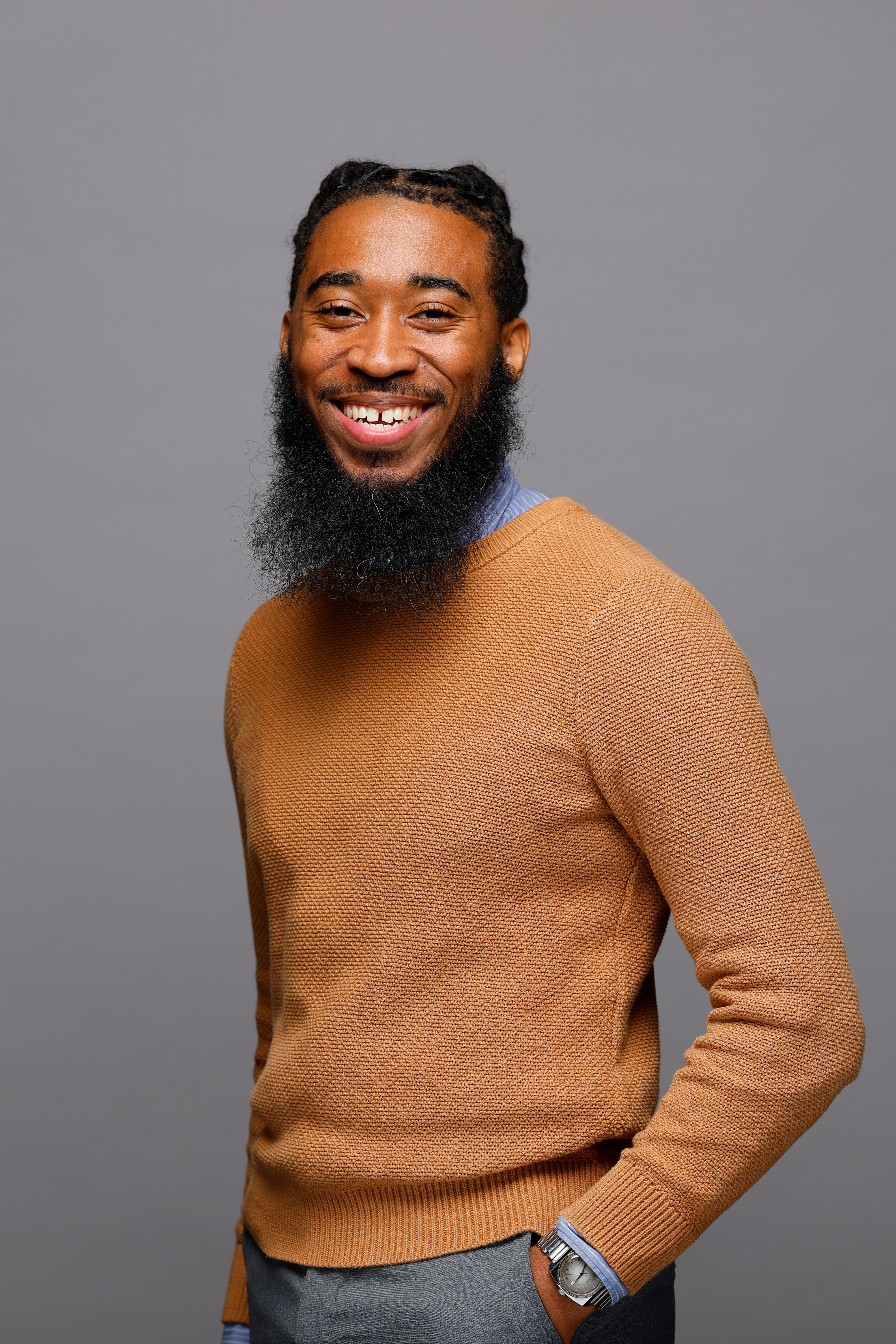 For Quantez Brooks, public health is deeply connected to the environments people grow
up in and the opportunities they can access every day.
For Quantez Brooks, public health is deeply connected to the environments people grow
up in and the opportunities they can access every day.
Now graduating from Morehouse School of Medicine’s Master of Public Health program, Brooks focused his research on sustainability and “using sustainability to make data-driven decisions.” But his understanding of public health began long before graduate school through experiences growing up in Atlanta.
“Growing up, I had to walk to this one park all the way outside of where I lived,” Brooks said. “We lived in a pretty big apartment complex neighborhood where there’s no park, no tennis courts.”
At the time, Brooks said he and the other children in the neighborhood did not think much about the long walk because they were simply focused on having fun. But as he got older, those experiences began to take on new meaning.
“I didn’t really know how these experiences, these personal experiences, were kind of shaping me,” he said. “So when I got into those public health spaces, I just understood immediately how it resonates as you get older.”
Brooks said his perspective on public health expanded further during a global health course he took during his final year of undergraduate studies.
“I learned so much about how the built environment and infrastructure plays a role in our health outcomes as individuals,” he said. “Having access to green spaces, sidewalks, bike lanes, public transportation and just being able to have those options around you really leads to a better health outcome.”
He also saw firsthand how access to public transportation could create opportunities for employment, health care and financial stability.
“Being able to get to work gave me access to income,” Brooks said. “It gave me access to health care because I had access to a job that’s providing me health care through that job.”
At Morehouse School of Medicine, Brooks found opportunities to apply those ideas in real-world settings through the MPH program’s applied practice experience, which allows students to work directly with professionals and organizations connected to their areas of interest.
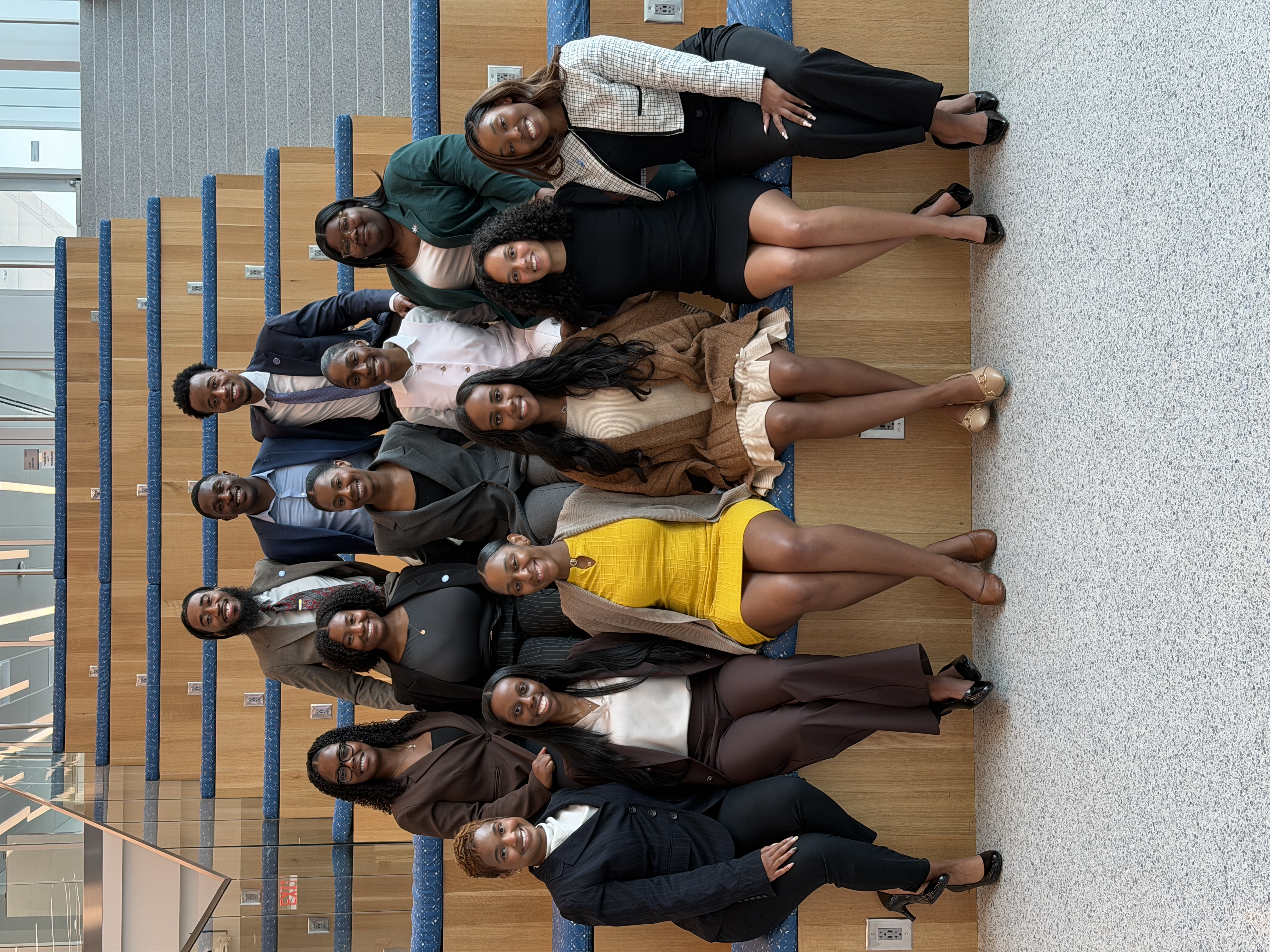 Through that experience, Brooks worked with Georgia Tech professionals on a data dashboard
project that organized Atlanta-area census and community data into a more accessible
format for stakeholders and decision-makers.
Through that experience, Brooks worked with Georgia Tech professionals on a data dashboard
project that organized Atlanta-area census and community data into a more accessible
format for stakeholders and decision-makers.
“What that dashboard does, it puts all that data into a nice, pretty laid out platform where there’s charts, there’s bar graphs, pie charts and line graphs,” Brooks said. “Things are just letting you know, like, ‘Hey, you can see the trend, you can see the trajectory and you can make a better decision for the surrounding community.’”
Brooks also participated in sustainability-focused projects with Mercedes-Benz Stadium, where he learned how infrastructure and environmental planning can directly impact surrounding communities.
“They didn’t want to bring the stadium here and just say, ‘Alright, it’s a beautiful stadium here,’” Brooks said. “They wanted to make sure the stadium provided jobs and didn’t further hurt the community by creating more flooding.”
Through those projects, Brooks said he was able to see how public health extends beyond hospitals and clinics into the systems and spaces people interact with daily.
“Being able to be in that process and be exposed to that, I was able to see what real-world public health looks like when it goes from the data to the professionals to the community,” he said.
Outside of academics, Brooks said serving as Public Health class president in the Student Government Association gave him opportunities to grow as a leader and connect with professionals across the institution.
“Being in those rooms and being in those spaces gave me access to see real professionals and how they move within their day to day,” he said.
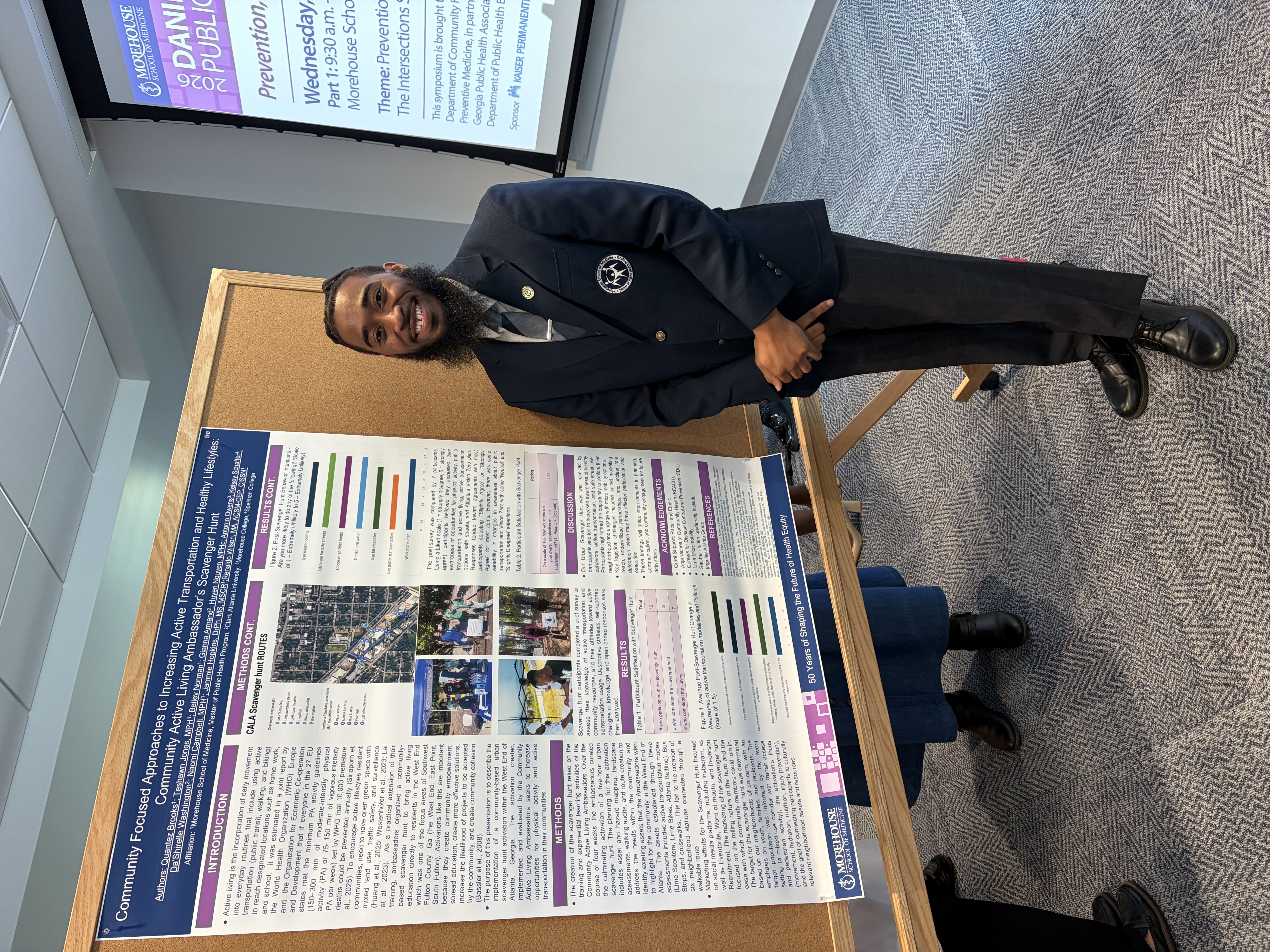 As a first-generation college graduate and first-generation graduate student, Brooks
said earning his MPH represents more than an academic milestone.
As a first-generation college graduate and first-generation graduate student, Brooks
said earning his MPH represents more than an academic milestone.
“The most important thing that I’ve prided myself on is setting that tone,” he said. “I have a lot of younger family members that do look up to me in this process.”
Looking ahead, Brooks says he feels prepared to enter the workforce and hopes to continue giving back to the communities that shaped him.
“I just want to give back in any capacity,” he said. “Whether I go back and talk to my old high school, middle school kids or come back here and talk to these students, I just want to show people what’s possible.”
About the Author
Michael Martin is a content strategist who believes in crafting compelling stories that inspire and connect. With a pen for storytelling, he brings the journeys of students, faculty and staff to life, highlighting their impact and dedication to healthcare.
Contact
Michael Martin
Digital Content Strategist
Office of Marketing & Communications
mamartin@msm.edu